Physical Address
304 North Cardinal St.
Dorchester Center, MA 02124
Physical Address
304 North Cardinal St.
Dorchester Center, MA 02124
Discover our comprehensive Supadata review covering features, pricing, pros, cons, and real-world use cases. Learn whether Supadata is the right AI data platform for your needs in 2026.
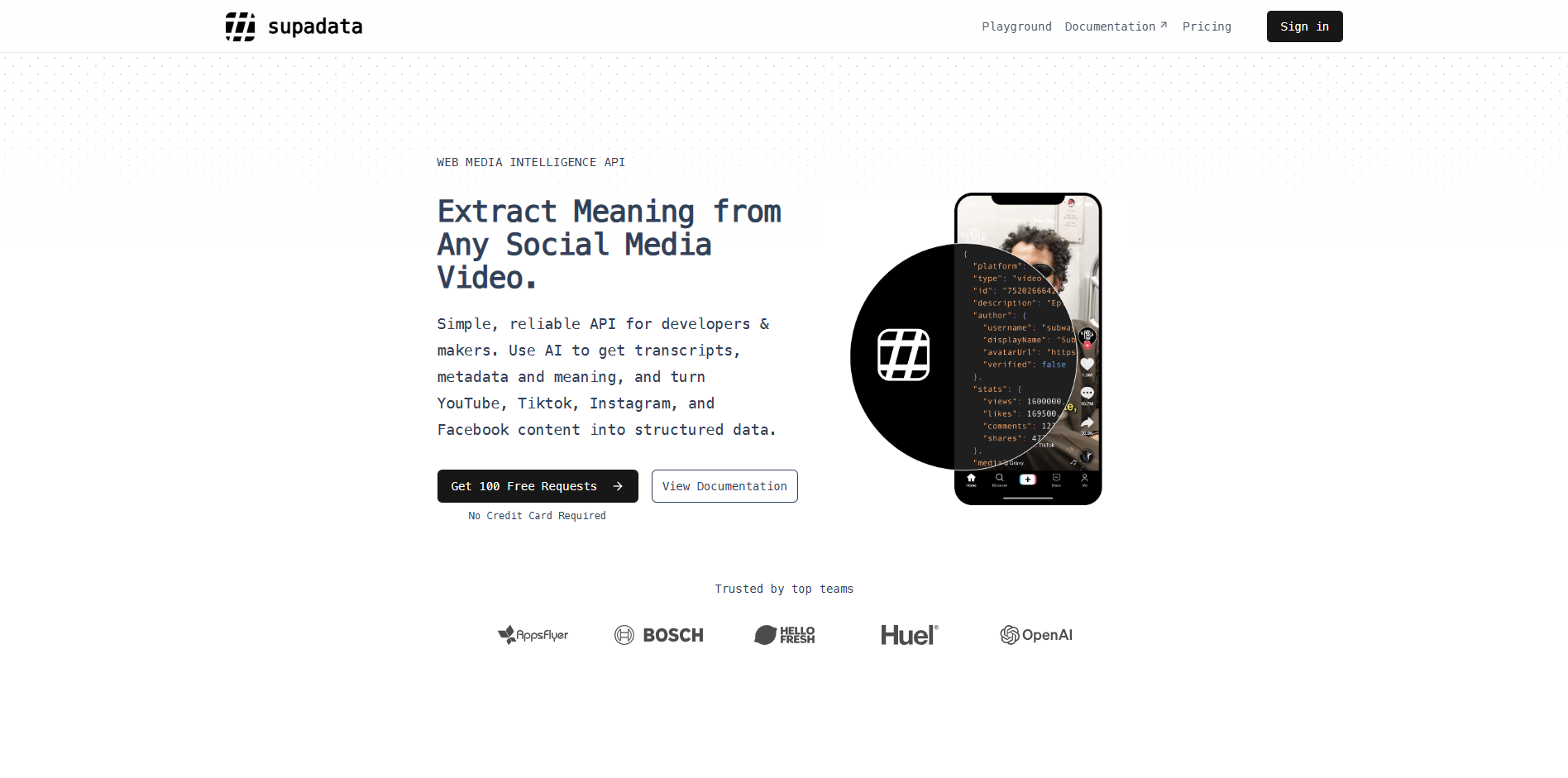
In today’s AI-driven world, data has become one of the most valuable resources for businesses, developers, marketers, researchers, and startups. The challenge is no longer finding information online but collecting, processing, and transforming that information into a format that AI systems can understand and use effectively. This is where Supadata enters the conversation.
Supadata is an AI-focused data infrastructure platform designed to help users extract, process, and utilize web content at scale. Instead of spending countless hours building custom scrapers, maintaining APIs, or manually collecting information from multiple sources, users can leverage Supadata to simplify the entire workflow. The platform aims to provide clean, structured, and AI-ready data that can power applications, large language models, search systems, retrieval-augmented generation (RAG) pipelines, analytics tools, and automation projects.
As artificial intelligence continues to evolve, access to quality data becomes increasingly important. Many organizations invest heavily in machine learning models but underestimate the complexity of data collection and preparation. Supadata addresses this issue by focusing on the data layer, allowing teams to spend more time building products and less time managing infrastructure. Whether you’re a solo developer building an AI startup, a researcher gathering large datasets, or a company developing intelligent applications, the ability to access reliable data can significantly impact results.
One of the reasons Supadata has gained popularity is its developer-first approach. The platform focuses on usability, scalability, and integration flexibility. Instead of offering a complicated enterprise-only solution, it provides tools that developers can quickly adopt and implement. This accessibility has attracted attention from both technical and non-technical users who need efficient data extraction capabilities without investing in extensive engineering resources.
The growing demand for AI-powered products has also increased the need for solutions that bridge the gap between raw web information and machine-readable knowledge. Supadata aims to become that bridge. By transforming unstructured content into usable formats, it enables organizations to build smarter systems faster. In this review, we’ll examine the platform’s features, strengths, limitations, pricing considerations, practical applications, and overall value proposition to determine whether Supadata deserves a place in your technology stack.
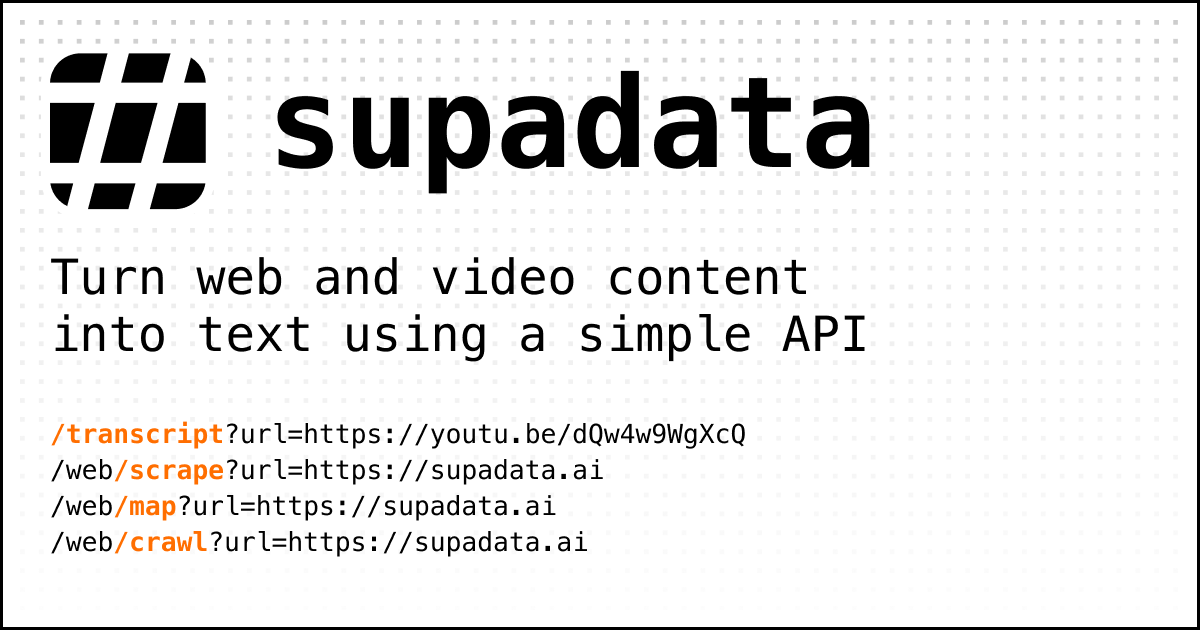
When evaluating any data infrastructure platform, features are often the deciding factor. Supadata offers a comprehensive set of capabilities designed to simplify data extraction and preparation for AI applications. While many competitors focus solely on scraping or data collection, Supadata positions itself as a broader solution that supports the entire workflow from acquisition to utilization.
One of the platform’s core strengths is web content extraction. Traditional web scraping can be difficult due to dynamic websites, changing layouts, anti-bot protections, and inconsistent formatting. Supadata aims to reduce these challenges by providing a streamlined approach that allows users to extract information with minimal setup. Instead of writing extensive custom code, users can access structured outputs that are easier to process and analyze.
Another notable feature is AI-ready formatting. Raw web content often contains unnecessary elements such as navigation menus, advertisements, formatting inconsistencies, and duplicated text. Preparing this content for machine learning systems can take considerable effort. Supadata helps remove much of this friction by organizing information into formats suitable for AI workflows, reducing preprocessing requirements and improving efficiency.
Scalability is another important aspect. Businesses frequently start with small projects but eventually need to handle larger volumes of data. Supadata appears designed with growth in mind, allowing users to scale data collection efforts without rebuilding infrastructure. This flexibility makes the platform attractive to startups that expect future expansion.
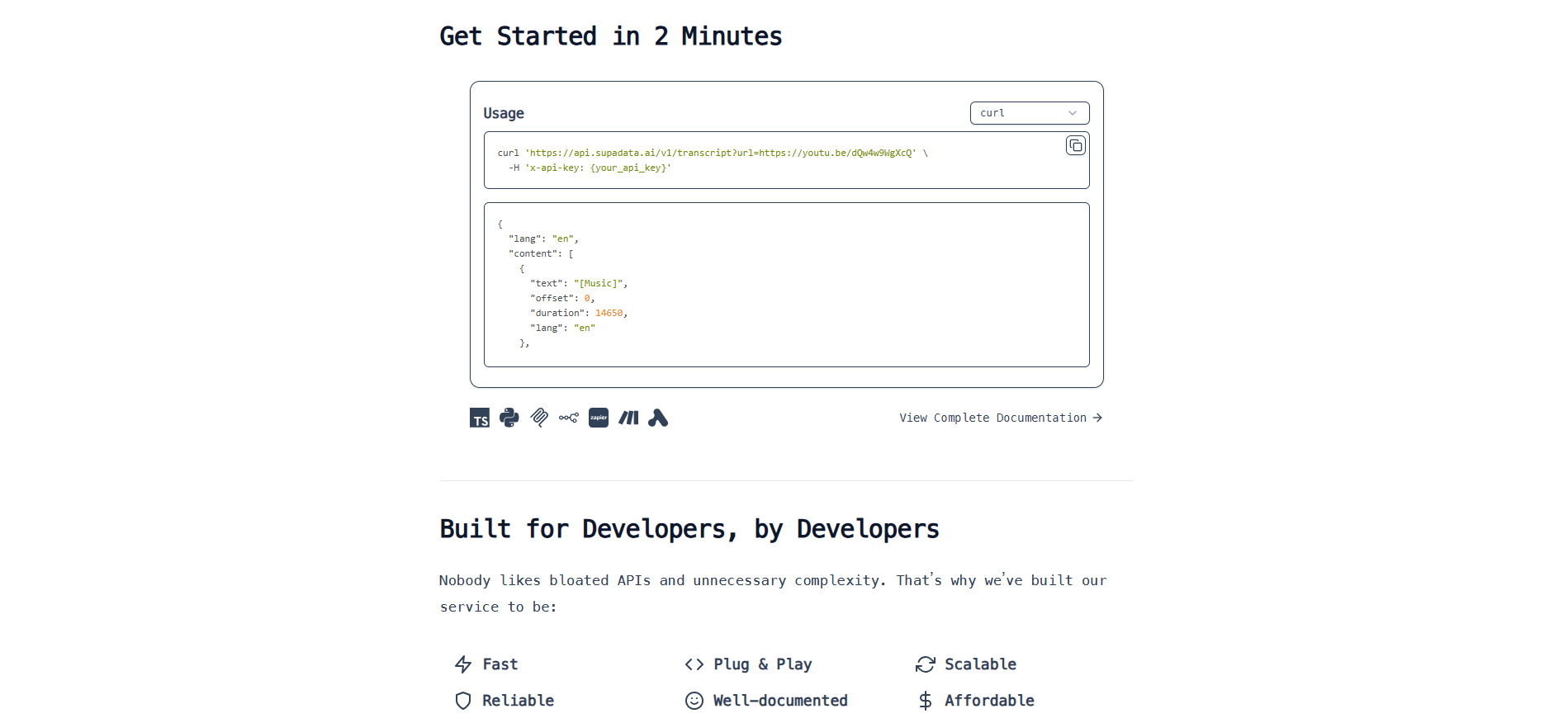
API accessibility represents another major advantage. Modern development workflows rely heavily on APIs because they enable seamless integration with applications, automation tools, and internal systems. Supadata provides developer-friendly interfaces that make it easier to connect data pipelines to existing products and services.
The platform also emphasizes reliability. Data collection systems often fail due to website changes, server limitations, or technical errors. Maintaining stable operations can require significant engineering resources. By abstracting much of this complexity, Supadata helps users focus on utilizing data rather than constantly troubleshooting extraction mechanisms.
Documentation quality is another factor that influences adoption. Developers generally prefer tools that are easy to understand and implement. A platform with clear documentation can dramatically reduce onboarding time. Supadata appears to recognize this need by offering resources that support implementation and integration efforts.
Beyond technical capabilities, the platform aligns with broader industry trends. Retrieval-Augmented Generation (RAG), AI agents, intelligent search systems, and custom chatbots all require access to high-quality data. Supadata’s feature set directly supports these use cases, making it relevant to organizations exploring next-generation AI applications.
Ultimately, the feature package reflects a platform designed not merely for data collection but for enabling AI development at scale. This distinction helps explain why many developers and startups are considering Supadata as part of their technology infrastructure.
The rise of artificial intelligence has created a new category of infrastructure companies focused on data accessibility and preparation. Among these emerging solutions, Supadata has attracted considerable attention from developers seeking efficient ways to power AI systems. Understanding why the platform is gaining popularity requires examining the challenges modern developers face.
One of the biggest obstacles in AI development is obtaining reliable data. While large language models receive significant attention, the quality of outputs often depends heavily on the quality of inputs. Developers building chatbots, recommendation systems, search engines, AI assistants, and knowledge bases need accurate information sources. Collecting and maintaining these sources manually can become expensive and time-consuming.
Supadata helps address this problem by simplifying data acquisition. Instead of dedicating engineering resources to custom extraction systems, developers can focus on product development. This shift in priorities can significantly accelerate project timelines, particularly for startups with limited budgets and small teams.
Speed is another reason for the platform’s growing adoption. In competitive markets, launching quickly can determine whether a product succeeds or fails. Infrastructure tools that reduce development complexity provide immediate value. By offering ready-to-use data workflows, Supadata enables faster experimentation and iteration.
Flexibility also contributes to its popularity. Developers rarely work on identical projects. Some need web content for research, while others require knowledge base creation, content aggregation, competitive analysis, or AI training datasets. A flexible platform can serve multiple use cases without forcing users into rigid workflows. Supadata appears designed to accommodate diverse requirements, making it appealing to a broader audience.
The increasing adoption of Retrieval-Augmented Generation systems has further amplified demand for platforms like Supadata. RAG architectures combine large language models with external knowledge sources to improve accuracy and reduce hallucinations. Building these systems requires continuous access to high-quality information. Supadata provides infrastructure that supports this process, making it relevant to one of the fastest-growing segments of AI development.
Cost efficiency is another important consideration. Building proprietary data infrastructure can require substantial investment in servers, maintenance, monitoring, engineering talent, and compliance efforts. For many organizations, outsourcing part of this complexity to a specialized platform is economically attractive. Supadata offers an alternative that may reduce operational overhead while maintaining performance.
Community interest has also played a role in adoption. Developers often rely on recommendations from peers, online discussions, and industry networks when evaluating tools. Positive feedback and growing visibility can create momentum that encourages further adoption. As more teams experiment with AI-powered products, awareness of specialized data platforms continues to expand.
Another factor is future readiness. Technology decisions increasingly consider long-term scalability and compatibility with emerging AI workflows. Organizations want infrastructure that can support evolving requirements rather than becoming obsolete after a few months. Supadata’s positioning within the AI ecosystem suggests a focus on long-term relevance rather than short-term utility.
For developers seeking a practical solution to the growing complexity of data acquisition and preparation, Supadata presents a compelling option. Its popularity reflects broader industry needs rather than temporary trends, indicating that demand for such platforms is likely to continue increasing.
To understand the true value of any platform, it is important to examine practical applications rather than focusing solely on features. Supadata offers benefits across a wide range of industries and use cases, making it relevant to businesses of different sizes and technical backgrounds.
One common application involves AI chatbots and virtual assistants. These systems require access to accurate and up-to-date information in order to provide useful responses. Supadata can help gather and structure knowledge sources that improve chatbot performance. Instead of relying exclusively on static training data, organizations can create more dynamic systems capable of referencing current information.
Content aggregation is another significant use case. Media companies, research organizations, and market intelligence firms often need to collect information from multiple sources. Manual collection methods are inefficient and difficult to scale. Supadata enables automated data acquisition workflows that streamline these processes and improve operational efficiency.
Researchers can also benefit from the platform. Academic studies, market research projects, and competitive intelligence initiatives frequently require large datasets gathered from online sources. Building custom collection infrastructure for every project is rarely practical. Supadata provides an alternative that allows researchers to focus on analysis rather than data collection logistics.
E-commerce businesses represent another important user group. Product information, pricing data, customer reviews, and competitor insights can influence strategic decisions. Accessing this information efficiently can provide a competitive advantage. Supadata helps simplify the process of gathering and organizing relevant data for business intelligence purposes.
Search applications are also becoming increasingly sophisticated. Traditional keyword-based search systems are being replaced by semantic search experiences powered by AI. These systems require structured content repositories capable of supporting intelligent retrieval mechanisms. Supadata contributes to this foundation by providing accessible data preparation workflows.
Knowledge management represents another valuable application area. Organizations often struggle with fragmented information distributed across websites, documents, databases, and external sources. Consolidating this information into centralized systems can improve productivity and decision-making. Supadata supports these initiatives by simplifying data acquisition and organization.
Marketing teams may also find value in the platform. Competitive monitoring, trend analysis, audience research, and content discovery often require continuous access to online information. Automated data collection can improve efficiency while providing deeper insights into market dynamics.
Startups benefit particularly from infrastructure simplification. Early-stage companies typically operate with limited engineering resources and aggressive timelines. Building custom data systems may not be feasible. Supadata enables teams to access advanced capabilities without extensive development effort, allowing them to allocate resources more effectively.
The broader benefit across all use cases is reduced complexity. Many organizations underestimate the challenges associated with collecting, cleaning, and maintaining large datasets. By abstracting much of this complexity, Supadata helps users achieve results faster while minimizing technical barriers.
These practical applications demonstrate that the platform’s value extends beyond theoretical capabilities. Whether supporting AI products, research initiatives, business intelligence systems, or knowledge management projects, Supadata addresses real-world challenges faced by modern organizations.

No platform is perfect, and evaluating Supadata requires considering both its strengths and limitations. Understanding these factors helps potential users determine whether the platform aligns with their specific requirements and expectations.
One of Supadata’s primary advantages is convenience. Building and maintaining custom data infrastructure can consume significant time and resources. By providing a ready-made solution, the platform reduces operational complexity and accelerates development timelines. For many organizations, this benefit alone may justify adoption.
Developer accessibility is another strength. Platforms that require extensive onboarding often face adoption challenges. Supadata’s emphasis on usability helps lower barriers to entry, making it attractive to both experienced engineers and smaller teams.
Scalability also ranks among the platform’s notable advantages. As projects grow, data requirements typically increase. Infrastructure capable of supporting expansion without major architectural changes provides long-term value. Supadata appears designed with this consideration in mind.
AI-focused functionality represents another differentiator. While general-purpose scraping tools exist, many are not optimized for AI workflows. Supadata’s positioning around AI-ready data provides relevance for modern development environments.
However, there are potential limitations to consider. Organizations with highly specialized requirements may still need custom infrastructure. While managed platforms offer convenience, they may not provide the same level of control as proprietary systems.
Cost can also become a factor depending on usage levels. Businesses should evaluate pricing relative to projected data volumes, API consumption, and operational requirements. What appears affordable for a small project may become more significant at larger scales.
Dependency on third-party infrastructure represents another consideration. Some organizations prefer complete ownership of critical systems, particularly when dealing with sensitive workflows. Adopting any external platform involves trade-offs between convenience and control.
Learning curves, while relatively manageable, may still exist for users unfamiliar with data engineering concepts. Successful implementation often requires at least a basic understanding of APIs, automation workflows, and AI-related processes.
Potential users should also evaluate integration requirements. While flexibility is generally beneficial, every organization’s technology stack is unique. Compatibility assessments remain important before committing to any infrastructure platform.
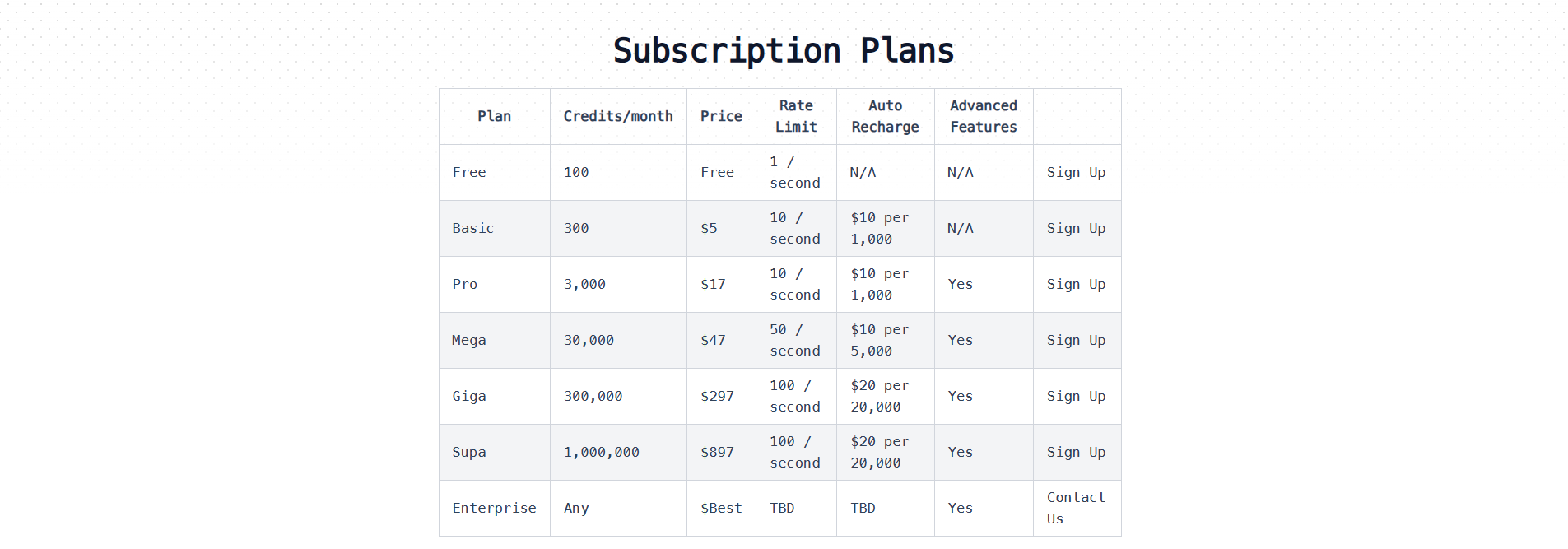
From a pricing perspective, value should be measured not only by subscription costs but also by saved engineering time, reduced maintenance expenses, and accelerated product development. In many cases, indirect savings can exceed direct costs, particularly for smaller teams.
Overall, the advantages appear to outweigh the limitations for many use cases. The platform’s strengths in accessibility, scalability, and AI-focused functionality make it a strong candidate for organizations seeking efficient data infrastructure solutions.
After evaluating Supadata’s features, practical applications, strengths, and limitations, the platform emerges as a compelling option for developers, startups, researchers, and businesses working with AI-powered systems. Its focus on transforming web content into structured, AI-ready data addresses one of the most significant challenges facing modern technology teams.
The growing importance of artificial intelligence has increased demand for reliable data infrastructure. While much industry attention remains focused on models and algorithms, successful AI projects depend heavily on data quality and accessibility. Supadata recognizes this reality and positions itself as a solution that simplifies one of the most resource-intensive aspects of AI development.
The platform’s appeal lies largely in its ability to reduce complexity. Instead of building and maintaining custom extraction systems, users can leverage managed infrastructure designed specifically for data acquisition and preparation. This approach accelerates development timelines while reducing operational overhead.
Another notable advantage is versatility. The platform supports a wide variety of use cases, including chatbots, retrieval-augmented generation systems, semantic search applications, market research projects, competitive intelligence initiatives, knowledge management systems, and content aggregation workflows. This broad applicability increases its value across different industries.
Scalability further strengthens the platform’s position. Organizations rarely remain static, and infrastructure decisions should account for future growth. Supadata appears capable of supporting expansion without requiring extensive architectural redesigns, making it suitable for both small projects and larger deployments.
While potential users should carefully evaluate pricing, integration requirements, and long-term dependencies, the overall value proposition remains strong. For many organizations, the benefits of faster development, reduced maintenance burdens, and improved data accessibility can significantly outweigh potential drawbacks.
As AI adoption continues to accelerate throughout 2026 and beyond, demand for specialized data infrastructure is likely to increase. Platforms capable of delivering reliable, structured, and AI-ready information will play an increasingly important role in the technology ecosystem. Supadata appears well-positioned to capitalize on this trend.
For developers seeking a practical and scalable approach to data acquisition, Supadata is certainly worth considering. It combines modern infrastructure principles with AI-focused functionality, creating a solution that aligns with current industry needs. While no platform can satisfy every requirement, Supadata offers a balanced combination of usability, scalability, and performance that makes it a strong contender in the rapidly evolving AI data landscape.
