Physical Address
304 North Cardinal St.
Dorchester Center, MA 02124
Physical Address
304 North Cardinal St.
Dorchester Center, MA 02124

Software development has evolved dramatically over the past decade. While AI coding assistants have made writing code faster than ever, one of the biggest bottlenecks remains the code review process. Developers often wait hours—or even days—for teammates to review pull requests, identify bugs, and suggest improvements. These delays can slow down releases, increase technical debt, and reduce overall productivity.
This is where Coderabbit AI changes the game. Instead of relying solely on manual reviews, Coderabbit uses advanced artificial intelligence to analyze pull requests, detect potential issues, explain code changes, and provide actionable recommendations before a human reviewer even starts reading the code.
Whether you’re an independent developer, a startup founder, or part of a large engineering organization, Coderabbit can dramatically reduce review time while maintaining high standards of code quality. By integrating directly with popular Git platforms, the tool becomes a natural extension of your development workflow rather than another complicated application to manage.
In this comprehensive guide, you’ll discover everything you need to know about Coderabbit, including its key features, integrations, pricing, advantages, limitations, and why thousands of developers are adopting AI-powered code reviews.
Modern software teams are shipping code faster than ever before. Agile development, continuous integration, and continuous deployment have increased release frequency, but they have also created enormous pressure on engineering teams.
Every pull request needs careful review before reaching production. Traditional reviews consume valuable developer time because reviewers must understand code changes, identify possible bugs, verify coding standards, and ensure security best practices are followed.
Unfortunately, human reviewers face several challenges:
Coderabbit addresses these problems using large language models trained to understand software engineering principles. Rather than replacing human developers, it acts as an intelligent reviewer that performs the first review automatically.
When a developer opens a pull request, Coderabbit immediately begins analyzing:
Instead of simply pointing out problems, the AI explains why an issue matters and often recommends better implementations.
For example, if a new function introduces unnecessary complexity, Coderabbit may recommend simplifying the logic. If an SQL query could be vulnerable to injection attacks, it highlights the risk and suggests safer alternatives.
Because these suggestions appear directly inside the pull request, developers can fix problems before teammates spend time reviewing them.
The result is a faster development cycle with fewer production bugs.
One of the biggest strengths of Coderabbit is that it continuously learns from modern software engineering practices. It understands many programming languages including:
This broad language support makes it suitable for companies with multiple technology stacks.
Instead of replacing engineering judgment, Coderabbit amplifies it by handling repetitive review tasks automatically.

Software quality depends on effective collaboration. The best development teams aren’t simply writing code quickly—they’re writing maintainable, secure, and scalable software.
Code reviews play a central role in achieving this goal.
However, manual reviews often become a bottleneck because experienced developers are constantly balancing multiple responsibilities:
As projects grow larger, reviewing every line of code becomes increasingly difficult.
Coderabbit dramatically reduces this workload.
Instead of spending twenty or thirty minutes identifying obvious issues, reviewers receive an AI-generated summary that explains:
This allows human reviewers to focus on architecture, business logic, and product decisions rather than formatting or repetitive coding mistakes.
Another significant advantage is consistency.
Different reviewers often have different coding styles. One reviewer might prioritize readability, while another emphasizes performance. This inconsistency creates confusion for development teams.
Coderabbit applies consistent standards to every pull request.
Every contributor receives the same level of analysis regardless of experience.
Junior developers benefit even more because every pull request becomes a learning opportunity.
Instead of simply seeing “Please refactor this function,” they receive detailed explanations describing why a different implementation would be better.
Over time, developers naturally improve their coding habits.
Organizations adopting AI-assisted reviews often report improvements such as:
Rather than replacing collaboration, Coderabbit enhances communication between developers by providing objective, actionable insights.
The popularity of Coderabbit comes from its impressive feature set. Instead of acting like a simple static analyzer, it behaves much more like an experienced software engineer reviewing your work.
Large pull requests are difficult to understand.
Coderabbit automatically generates concise summaries explaining the purpose of every code change.
Instead of reading hundreds of modified lines first, reviewers immediately understand the overall objective.
This significantly reduces review time.
One of Coderabbit’s strongest capabilities is providing contextual recommendations.
Examples include:
Unlike generic linting tools, suggestions are based on the surrounding code rather than isolated rules.
Security vulnerabilities can be expensive.
Coderabbit scans pull requests for common risks including:
Detecting these problems early helps organizations avoid costly security incidents.
AI also evaluates opportunities to improve application performance.
Examples include:
Although developers make the final decision, these insights often reveal improvements that might otherwise be overlooked.
Reliable software depends on automated testing.
Coderabbit identifies situations where:
This encourages healthier engineering practices across the entire team.
Good software isn’t just functional—it is understandable.
The AI reviews:
Well-documented code becomes easier to maintain months or even years later.
Perhaps the most valuable feature isn’t automation.
It’s education.
Every suggestion includes explanations that help developers understand best practices.
Instead of merely fixing one pull request, engineers gradually become stronger programmers over time.
This creates long-term value that extends far beyond faster reviews.
As AI continues evolving, tools like Coderabbit are becoming essential components of modern software engineering workflows. Organizations that embrace intelligent code reviews today are positioning themselves to build software faster, more securely, and with greater confidence than ever before.

One of the biggest advantages of adopting a new development tool is how easily it fits into an existing workflow. Developers generally avoid software that requires learning an entirely new platform or changing established processes. Fortunately, Coderabbit was built with seamless integration in mind, allowing engineering teams to continue working with the version control platforms they already use every day.
Whether your team manages repositories on GitHub, GitLab, or Bitbucket, Coderabbit connects directly to your repositories and automatically reviews pull requests as soon as they are opened or updated. There is no need to upload files manually or switch between multiple dashboards. Everything happens within the interface developers already know.
GitHub remains the most popular platform for software development, hosting millions of public and private repositories. Coderabbit enhances GitHub Pull Requests by automatically generating:
Developers receive comments directly inside the Pull Request conversation, making it easy to discuss suggested improvements with teammates. Since all feedback remains within GitHub, project history stays organized and transparent.
Many enterprises rely on GitLab because of its integrated DevOps capabilities. Coderabbit supports GitLab Merge Requests by performing automated reviews before code reaches production.
Engineering managers appreciate this integration because it reduces manual review time while maintaining consistent coding standards across multiple teams.
Whether your organization follows GitFlow, trunk-based development, or feature branching, Coderabbit adapts naturally to existing workflows.
Bitbucket is especially popular among organizations already using Atlassian products like Jira and Confluence.
Coderabbit integrates smoothly into Bitbucket repositories, allowing teams to continue using Jira issue tracking while benefiting from AI-assisted code reviews.
This creates an efficient development environment where planning, coding, reviewing, and deployment remain connected.
Modern software development depends heavily on CI/CD pipelines.
Coderabbit works alongside popular automation platforms without interrupting existing deployment processes.
Developers can continue using:
Instead of replacing these systems, Coderabbit complements them by improving code quality before automated builds begin.
Getting started usually takes only a few minutes:
From that point forward, Coderabbit automatically reviews new code without requiring additional effort.
This low barrier to entry makes adoption easy for startups, freelance developers, and enterprise engineering teams alike.
Choosing development tools often comes down to one simple question: Will this save more time than it costs?
For many organizations, the answer with Coderabbit is yes.
Instead of evaluating price alone, businesses should consider the hidden costs of manual code reviews:
Even small inefficiencies become expensive when multiplied across an entire development team.
Coderabbit offers an entry-level option suitable for:
The free plan allows users to experience AI-powered reviews before committing to a paid subscription.
This makes it an excellent way to evaluate the platform with minimal risk.
Growing engineering teams typically require additional capabilities such as:
These plans are designed for companies where multiple developers collaborate daily.
Because every Pull Request benefits from AI assistance, the productivity gains increase as team size grows.
Large organizations often require:
Coderabbit’s enterprise offerings are built to meet these requirements while maintaining the same AI-powered review experience.
Consider a development team of ten engineers.
If each engineer spends approximately thirty minutes reviewing code every day, the team collectively spends around five hours daily on reviews.
If AI reduces review time by just 30%, the organization saves roughly:
Those saved hours can instead be invested in:
For many businesses, this productivity improvement easily outweighs the subscription cost.
The value of Coderabbit extends beyond financial calculations.
Benefits include:
These long-term improvements contribute to stronger engineering cultures and more reliable software products.
Traditional code reviews have been a cornerstone of software engineering for decades. They encourage collaboration, improve maintainability, and help teams share knowledge.
However, traditional reviews also have limitations that become more apparent as projects scale.
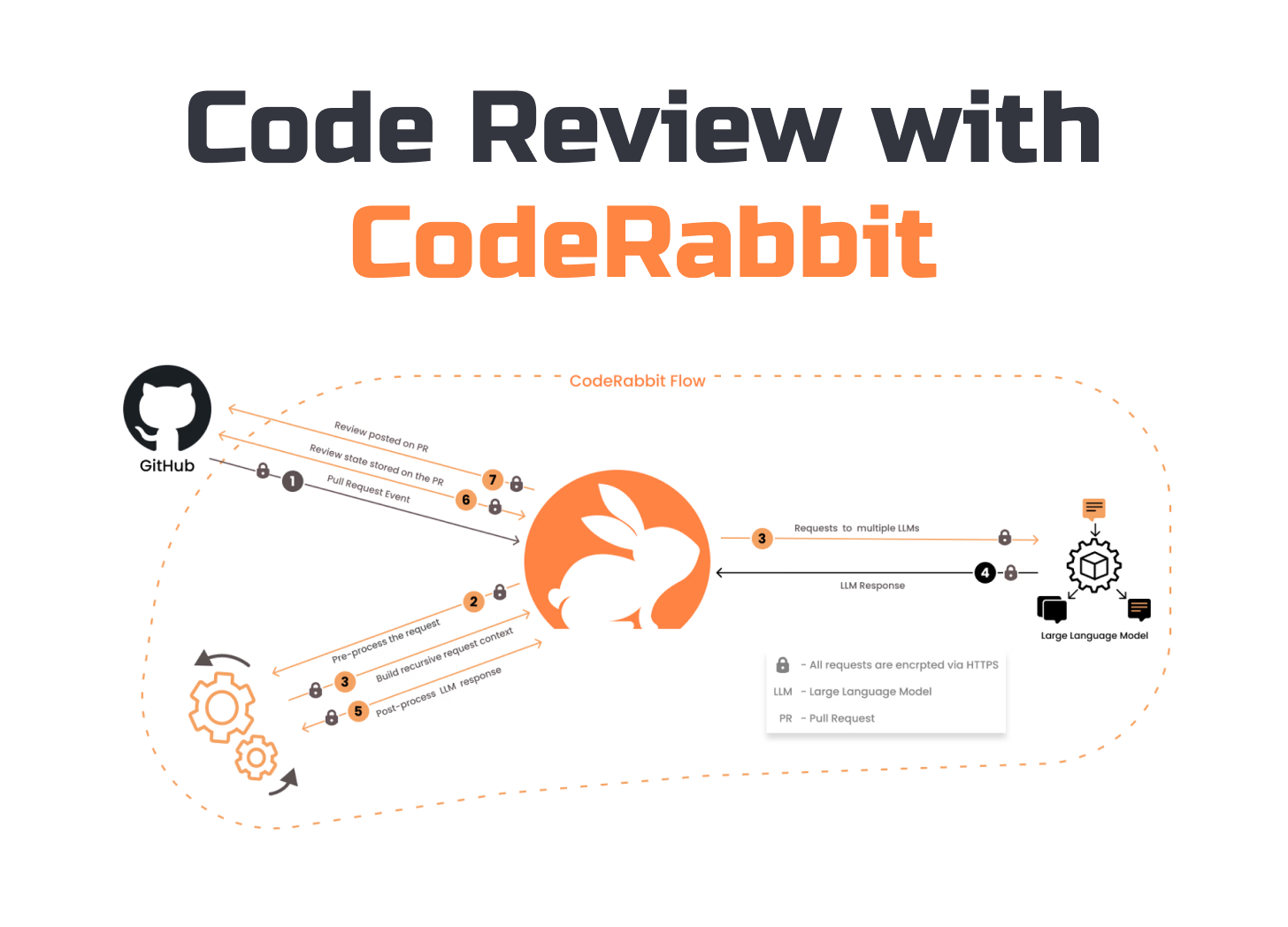
In a conventional review process, a developer submits a Pull Request and waits for another engineer to inspect the changes.
The reviewer must:
Depending on workload, this process may take hours or even days.
Large organizations often struggle with review bottlenecks because senior developers become overloaded with Pull Requests.
Coderabbit performs the initial analysis automatically.
Within minutes, developers receive:
Human reviewers can then focus on the aspects that truly require engineering judgment, such as:
Instead of replacing developers, AI removes repetitive work from the review process.
Traditional reviews depend heavily on the reviewer.
Different engineers often have different expectations.
Some reviewers prioritize clean architecture.
Others emphasize performance.
Some care deeply about naming conventions, while others overlook documentation entirely.
Coderabbit applies consistent review criteria to every Pull Request.
This consistency helps teams establish stronger engineering standards over time.
Junior developers often receive limited explanations during manual reviews due to time constraints.
Comments such as:
may not explain why improvements are necessary.
Coderabbit provides detailed reasoning behind its recommendations, helping developers understand best practices instead of simply correcting mistakes.
Despite impressive AI capabilities, human reviewers remain essential.
Certain decisions require business knowledge that AI cannot fully understand, including:
The strongest engineering teams combine AI analysis with experienced human judgment.
AI handles repetitive inspection.
Humans provide strategic thinking.
Together, they produce faster reviews, better software quality, and a more efficient development lifecycle.
Rather than viewing Coderabbit as a replacement for software engineers, organizations should see it as an intelligent teammate that accelerates every stage of the code review process while allowing developers to focus on solving meaningful problems.
As software development continues to evolve, maintaining high code quality while delivering features quickly has become one of the biggest challenges for engineering teams. Traditional code reviews remain an essential part of the development process, but they can often slow down releases and consume valuable developer time. Coderabbit addresses these challenges by bringing AI-powered intelligence into every pull request, helping teams identify bugs, improve code quality, strengthen security, and accelerate the review process without disrupting existing workflows.
Whether you’re an individual developer, a startup building your first product, or a large enterprise managing complex applications, Coderabbit offers practical benefits that go beyond simple automation. By providing clear explanations, actionable recommendations, and consistent code review standards, it enables developers to spend less time on repetitive review tasks and more time building innovative software.
Ultimately, Coderabbit is not designed to replace human reviewers—it is designed to make them more effective. Combining AI-powered insights with human expertise creates a faster, more reliable, and more collaborative development process. If your goal is to reduce review time, improve software quality, and increase overall engineering productivity, Coderabbit is well worth considering as part of your modern DevOps and software development toolkit.
