Physical Address
304 North Cardinal St.
Dorchester Center, MA 02124
Physical Address
304 North Cardinal St.
Dorchester Center, MA 02124
A Deep Dive into RapidNative: Optimizing Your Development Workflow
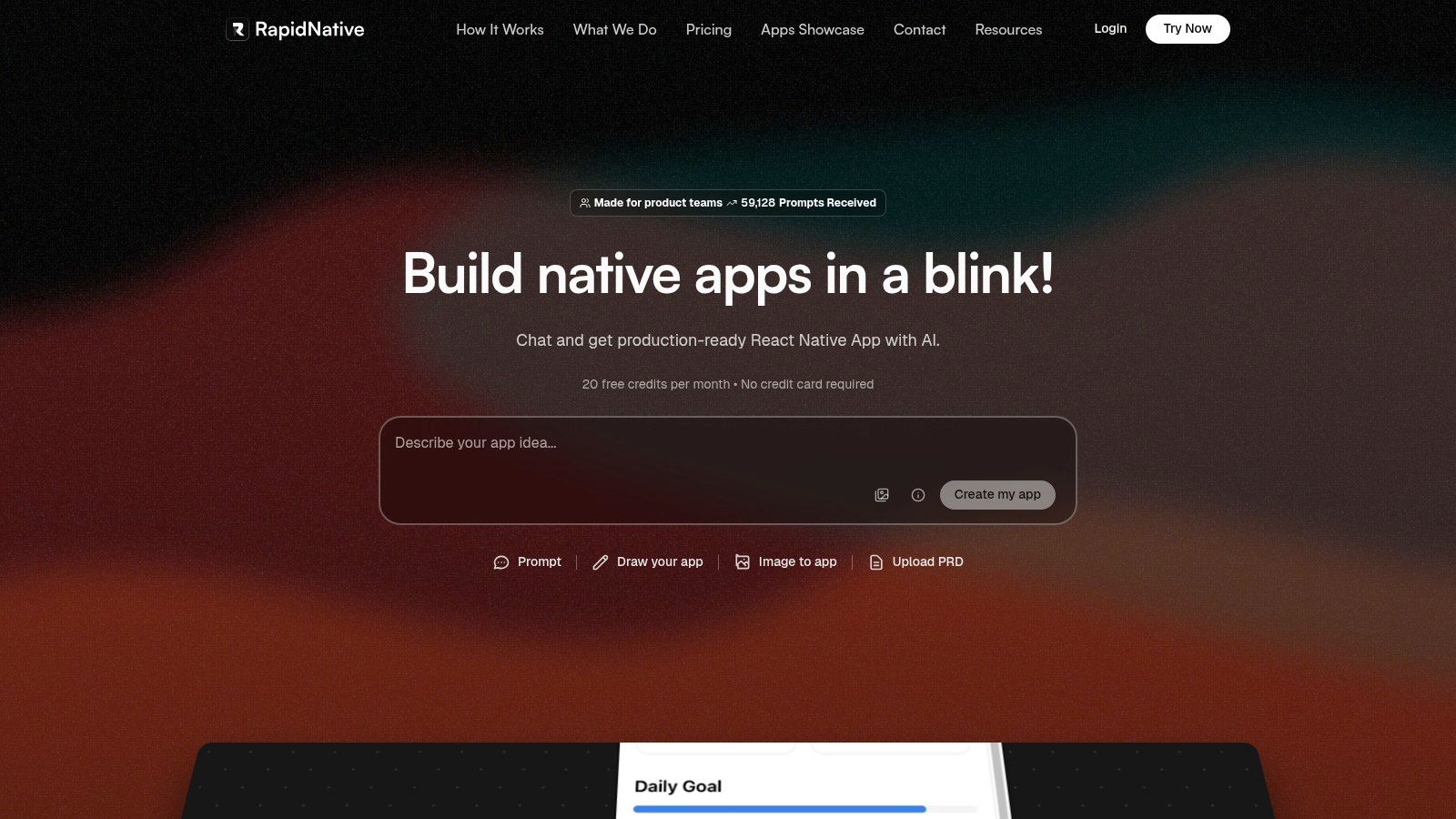
The core philosophy of RapidNative is centered on generating “clean” code rather than the “black box” outputs typical of older no-code tools. When you input a prompt—such as “Build a fitness tracker with a circular progress bar and a workout history list”—the engine doesn’t just spit out a single file. It constructs a modular project architecture that mirrors professional industry standards. The use of NativeWind (a Tailwind CSS implementation for React Native) ensures that styling is utility-based and highly maintainable, while the Expo integration means the project is ready to run on physical devices via a QR code almost instantly. This structural integrity is what separates it from simple LLM code snippets; it provides a holistic ecosystem where navigation, component separation, and TypeScript types are pre-configured to work in harmony.
One of the most impressive efficiency gains found in RapidNative is its “Image-to-App” capability. In traditional development, a designer hands off a Figma file, and a developer spends days meticulously translating paddings, colors, and layouts into code. With this tool, you can upload a screenshot or a hand-drawn whiteboard sketch, and the AI interprets the visual hierarchy to scaffold the UI. While real-world testing suggests an accuracy rate of about 70-80%, the time saved on initial “pixel pushing” is immense. Developers can bypass the tedious stage of building basic views and jump straight into high-value tasks like integrating complex business logic, setting up state management with Redux or Zustand, and connecting to backend APIs.
The platform features a “Canvas-Style” visual editor that fundamentally changes how product managers and stakeholders interact with the development cycle. Instead of waiting for a weekly demo, non-technical team members can use RapidNative to visualize the entire app flow on a digital board. They can see how screens connect, add new navigation paths via text prompts, and iterate on the user experience in real time. This “what you see is what you get” (WYSIWYG) approach reduces the friction of the feedback loop. By allowing stakeholders to “tweak” the UI through natural language before a single line of custom logic is written, teams avoid the costly mid-sprint pivots that often derail mobile projects.
A recurring fear with AI-driven builders is “vendor lock-in,” but RapidNative addresses this by offering a full, one-click export of the source code. Once you have used the AI to generate your 10 or 15 primary screens, you can download a standard Expo project. This means you own the IP and are free to move the project into your own IDE (like VS Code), set up your own CI/CD pipelines, and deploy to the App Store or Google Play without any lingering dependency on the platform. The generated TypeScript is surprisingly idiomatic, following SOLID principles and keeping files small and readable. This transparency ensures that the tool acts as a “starter motor” for your app rather than a restrictive cage, making it a viable choice for professional MVPs.
While the tool is transformative for UI and layout, users should maintain realistic expectations regarding backend complexity. Currently, RapidNative excels at the “front” of the frontend—handling screens, buttons, and navigation—but it does not generate your database schema, authentication logic, or complex server-side integrations. Developers will still need to manually refine about 30% of the screens to handle edge cases, and the TypeScript definitions often require a “human touch” to ensure perfect type safety across the entire application. It is best viewed as a high-speed scaffolding engine that eliminates the “blank page” problem, allowing your engineering talent to focus on the unique, difficult problems that make your app actually valuable.
Ultimately, RapidNative represents the future of mobile development by turning specifications into tangible assets in record time. For a solo founder or a small dev shop, the ability to generate a 10-screen app structure in under 30 minutes—a task that would manually take 20 to 40 hours—is a massive competitive advantage. It honors the “learn once, write anywhere” mantra of React Native while adding an “imagine once, generate anywhere” layer on top. If your goal is to validate an idea, build a high-fidelity prototype for investors, or simply accelerate your team’s sprint velocity, this tool provides the most professional-grade output in the current AI-native market.
